 Skip to content

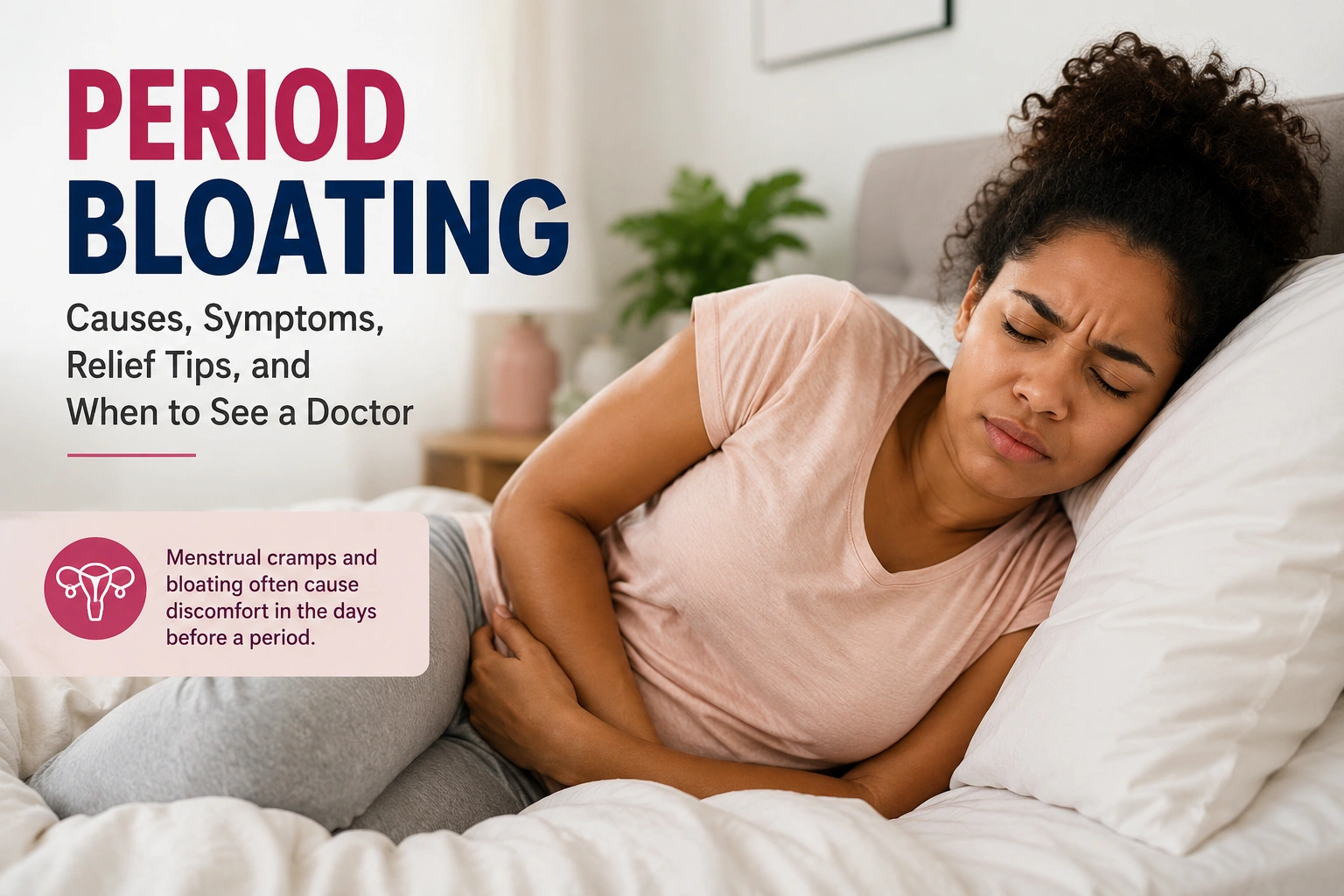
Period bloating is the feeling of fullness, tightness, or swelling in your abdomen before or during your period. It is one of the most common symptoms of premenstrual syndrome (PMS), and many women experience it every month.
This happens because your hormone levels change throughout your menstrual cycle. Before your period starts, changes in estrogen and progesterone can cause your body to hold on to extra water and salt. As a result, you may notice that your stomach feels heavier, tighter, or more swollen than usual.
Period bloating is different from the bloating you may feel after eating a large meal or having too much gas. Digestive bloating is usually caused by the food you eat or problems with digestion. Menstrual bloating, on the other hand, is linked to your menstrual cycle and is caused mainly by hormonal changes.
For most women, bloating begins a few days to a week before their period. It often improves once menstruation starts and usually goes away within a few days. Although it can be uncomfortable, period bloating is a normal part of the menstrual cycle for many women.
In this guide, you’ll learn what causes period bloating, how long it usually lasts, and the simple lifestyle changes and treatments that can help you feel more comfortable.
Calculator for you:
- Safe Period Calculator: Calculate Your Safe Days and Fertile Window
- Menstrual Calculator: Calculate Your Next Period and Menstrual Cycle
- Ovulation Calculator: Track Your Fertile Window
What Causes Period Bloating?

Period bloating happens mainly because of hormonal changes during your menstrual cycle. However, your diet, digestion, and daily habits can also make it better or worse.
1. Hormonal Changes
Hormones are the main reason you feel bloated before your period.
During the second half of your menstrual cycle, the levels of estrogen and progesterone begin to change. These hormonal changes cause your body to hold on to extra water and salt.
As a result, you may notice that your stomach feels fuller, your clothes feel tighter, or your body seems slightly swollen. This is a normal part of the menstrual cycle and usually improves once your period begins.
2. Increased Water Retention
Water retention is one of the biggest reasons period bloating happens.
Before your period starts, your body naturally stores more fluid than usual. This extra fluid can make your abdomen, hands, feet, or face feel puffy. Some women may even notice a small increase in body weight, but this is usually caused by water, not body fat.
Drinking enough water and reducing salty foods can help your body get rid of excess fluid more easily.
3. Digestive Changes
Hormonal changes can also affect how your digestive system works.
For some women, digestion becomes slower before their period. This can lead to constipation, trapped gas, or a feeling of fullness in the stomach. These digestive changes can make period bloating feel even worse.
Eating enough fibre, staying hydrated, and keeping active can help support healthy digestion during this time.
4. Diet and Lifestyle Factors
The foods you eat and your daily routine can have a big effect on period bloating.
Eating too much salt can cause your body to retain more water, making bloating worse. Processed foods, sugary snacks, fizzy drinks, alcohol, and too much caffeine may also increase discomfort for some women.
Lack of physical activity can slow digestion and circulation, which may make bloating last longer.
On the other hand, eating a balanced diet, exercising regularly, getting enough sleep, and managing stress can help reduce bloating and other PMS symptoms.
Period tools for you:
- Safe Period Calculator: How Accurate Is It? Limitations and Guide 2026
- Menstrual Calculator: Calculate Your Next Period and Menstrual Cycle
- Ovulation Calculator: Track Your Fertile Window
Common Symptoms of Period Bloating
Period bloating can feel different from one woman to another. Some may notice only mild discomfort, while others experience more noticeable symptoms before or during their period.
1. Visible Swelling
Your stomach may look or feel more swollen than usual. You may also notice that your jeans, skirts, or other fitted clothes feel tighter around your waist.
2. Feeling Full or Heavy
Many women describe period bloating as a feeling of fullness or heaviness in the abdomen. It may seem like you’ve gained weight, even though the extra weight is usually just water.
3. Abdominal Discomfort
A bloated stomach can feel uncomfortable or tight. Some women also experience mild cramps or pressure in the lower abdomen at the same time.
4. Temporary Weight Changes
It is normal to gain a small amount of weight before your period. This is usually caused by your body holding on to extra water and not by an increase in body fat.
5. Gas and Constipation
Hormonal changes can slow down digestion before your period. This may lead to gas, constipation, or a feeling of trapped air in your stomach, making bloating feel worse.
When Does Period Bloating Start?
For most women, period bloating begins before their period starts. It usually happens during the second half of the menstrual cycle, after ovulation and before menstruation.
Some women notice bloating just one or two days before their period, while others may start feeling bloated up to a week earlier. The exact timing can vary from person to person and from one cycle to the next.
The fact is that period bloating does not usually last for long. Once your period begins, your hormone levels start to change again, and your body gradually releases the extra fluid it has been holding.
Many women notice that the bloating starts to improve within the first day or two of their period. By the middle or end of menstruation, the swelling and feeling of fullness have usually gone away.
If your bloating is severe, lasts long after your period ends, or happens at other times in your cycle, it is good to speak with your healthcare provider. They can check whether another health condition may be causing your symptoms.
How to Reduce Period Bloating Naturally
Although there isn’t an instant cure for period bloating, there are several simple things you can do to feel more comfortable. Small changes to your diet and daily routine can make a big difference.
1. Drink Plenty of Water
Drinking enough water is one of the easiest ways to reduce period bloating.
It may seem surprising, but staying hydrated helps your body get rid of excess salt and water. Try to drink water regularly throughout the day, especially in the days before your period begins.
Carrying a reusable water bottle can help you stay hydrated wherever you go.
2. Reduce Salt Intake
Eating too much salt can cause your body to hold on to extra fluid, making bloating worse.
Try to limit processed foods, fast food, and salty snacks before your period. Choosing fresh foods and cooking more meals at home can help reduce your sodium intake.
3. Eat Potassium-Rich Foods
Potassium helps your body maintain a healthy fluid balance.
Foods such as bananas, avocados, spinach, sweet potatoes, tomatoes, and leafy green vegetables can help reduce water retention and ease bloating. They also provide important vitamins and minerals that support your overall health.
4. Increase Your Fiber Intake
Eating enough fibre helps keep your digestive system working properly.
Choose fibre-rich foods like oats, brown rice, fruits, vegetables, and whole grains. If you are not used to eating a lot of fibre, increase it gradually to avoid extra gas or stomach discomfort.
Yogurt and other probiotic foods may also help support healthy digestion.
5. Exercise Regularly
Regular physical activity can help reduce period bloating and improve your overall mood.
A brisk walk, light jog, cycling, swimming, or yoga can improve circulation, support digestion, and help your body release excess fluid. Even 20 to 30 minutes of exercise most days of the week can make a difference.
6. Limit Caffeine and Alcohol
Too much coffee, energy drinks, or alcohol may make period bloating worse for some women.
If you notice that these drinks increase your symptoms, try replacing them with water or herbal tea in the days leading up to your period.
7. Get Enough Sleep
Getting enough sleep gives your body time to recover and regulate hormone levels.
Aim for seven to nine hours of quality sleep each night. A regular sleep routine can also help reduce other PMS symptoms.
8. Manage Stress
Stress can make PMS symptoms, including bloating, feel worse.
Simple activities like deep breathing, meditation, stretching, or spending time doing something you enjoy can help you relax. Managing stress may also help your body feel more balanced during your menstrual cycle.
Best Foods That Help Reduce Period Bloating
Eating the right foods can help ease water retention and discomfort:
1. Bananas
Bananas are rich in potassium, a mineral that helps balance sodium levels in your body. This can reduce water retention and help relieve bloating.
2. Watermelon
Watermelon has a high water content, which helps keep you hydrated. It also contains potassium, making it a refreshing choice for reducing excess fluid.
3. Cucumbers
Cucumbers are made up mostly of water and can help your body stay hydrated. They are also light on the stomach, making them a good snack if you’re feeling bloated.
4. Leafy Green Vegetables
Spinach, kale, and other leafy greens are packed with potassium, fibre, and important vitamins. They support healthy digestion and may help reduce water retention.
5. Ginger
Ginger is well known for its natural anti-inflammatory properties. It may also help improve digestion, reduce gas, and relieve the feeling of bloating.
You can add fresh ginger to meals or enjoy it as a warm cup of ginger tea.
6. Peppermint Tea
Peppermint tea is naturally caffeine-free and can help relax the muscles of your digestive system. This may reduce gas, stomach discomfort, and bloating.
7. Other Potassium-Rich Foods
Foods like avocados, tomatoes, asparagus, and sweet potatoes are also good sources of potassium. Including these foods in your diet can help your body maintain a healthy fluid balance.
1. Whole Grains
Whole grains such as oats, brown rice, and whole wheat bread provide fibre that supports healthy digestion. If you are increasing your fibre intake, do so gradually to help prevent extra gas or stomach discomfort.
2. Eat Smaller Meals
Instead of eating a few large meals, try eating smaller meals throughout the day. This can help your digestive system work more comfortably and reduce the feeling of fullness.
A balanced diet that includes fruits, vegetables, lean protein, healthy fats, and whole grains can help reduce period bloating and support your overall health throughout your menstrual cycle.
Foods That May Make Period Bloating Worse
Just as some foods can help reduce period bloating, others can make it worse. Limiting these foods in the days before your period may help reduce swelling and discomfort.
Salty Foods and Processed Foods
Foods that are high in salt can cause your body to hold on to extra water, making bloating worse.
Try to limit foods such as chips, processed meats, canned soups, instant noodles, fast food, and other packaged snacks before your period.
Carbonated Drinks
Soft drinks, sparkling water, and other fizzy beverages contain carbon dioxide gas. This gas can build up in your digestive system and make your stomach feel even more bloated.
Choosing plain water or herbal tea instead may help reduce discomfort.
Fried and Fatty Foods
Fried foods can slow digestion and leave you feeling heavy or uncomfortable. Many fried foods are also high in salt, which may increase water retention.
Sugary Foods and Drinks
Eating too many sweets, cakes, pastries, or sugary drinks may contribute to bloating in some women. These foods can also affect digestion and may increase inflammation.
Too Much Caffeine and Alcohol
Coffee, energy drinks, and alcohol may make period bloating worse for some women. They can affect your body’s fluid balance and may increase other PMS symptoms.
If you notice they make your symptoms worse, try reducing your intake before and during your period.
Foods That Cause Gas
Some healthy foods, such as beans, lentils, onions, garlic, cabbage, broccoli, and cauliflower, can cause extra gas in some people. If these foods make you feel bloated, you may want to eat smaller amounts around your period.
Everyone is different, so pay attention to how your body responds to different foods.
Eating a balanced diet with plenty of fresh fruits, vegetables, whole grains, lean protein, and healthy fats can help reduce period bloating and support your overall health throughout your menstrual cycle.
Can Exercise Help Period Bloating?
Yes. Regular exercise can help reduce period bloating and other common PMS symptoms.
When you stay active, your blood circulation improves, your digestive system works better, and your body is able to release excess fluid more easily. Exercise can also help improve your mood and reduce stress, which may make PMS symptoms feel less severe.
You don’t have to do intense workouts to see the benefits. Even light exercise can make a difference.
Walking
A brisk walk is one of the easiest ways to reduce period bloating. Walking improves circulation, supports digestion, and may help your body get rid of extra fluid.
Yoga and Stretching
Gentle yoga and stretching can help relax your muscles and ease tension in your abdomen. Some yoga poses may also improve digestion and reduce the feeling of bloating.
Swimming
Swimming is a low-impact exercise that can help improve circulation and reduce water retention. It is also a good option if you want to stay active without putting too much strain on your body.
Light Cardio
Activities such as cycling, light jogging, dancing, or using an exercise bike can help boost circulation and support your body’s natural fluid balance.
The most important thing is to stay consistent. Even 20 to 30 minutes of moderate exercise on most days of the week can help reduce period bloating and support your overall health.
Medical Treatments for Period Bloating
For many women, simple lifestyle changes are enough to reduce period bloating. However, if your symptoms are severe or keep affecting your daily life, your healthcare provider may recommend medical treatment.
Over-the-Counter Pain Relievers
Pain relievers such as ibuprofen or naproxen can help ease menstrual cramps and reduce discomfort during your period. Although they do not directly treat bloating, they may help you feel more comfortable if bloating is accompanied by pain.
Always follow the instructions on the medicine label and speak to a healthcare provider if you are unsure whether these medicines are suitable for you.
Diuretics
If you have severe water retention, your doctor may prescribe a diuretic, also known as a “water pill.” Diuretics help your body remove excess fluid through urine, which may reduce swelling and bloating.
These medicines should only be used under medical supervision.
Magnesium Supplements
Some studies suggest that magnesium supplements may help reduce water retention and other PMS symptoms in some women.
Talk to your healthcare provider before taking magnesium or any other supplement to make sure it is safe and appropriate for you.
Hormonal Birth Control
Hormonal birth control, including birth control pills, patches, injections, or hormonal IUDs, may help reduce period bloating by keeping hormone levels more stable throughout your menstrual cycle.
Your doctor can explain the different options and help you decide whether hormonal birth control is right for you.
Talk to Your Healthcare Provider
If period bloating is severe, happens every month, or does not improve with lifestyle changes, it is important to speak with a healthcare provider. They can rule out other health conditions and recommend the treatment that is best for your individual needs.
When Should You See a Doctor?
Mild period bloating is a normal part of the menstrual cycle for many women. It usually goes away within a few days after your period begins.
However, there are times when bloating may be a sign of another health condition. You should speak with a healthcare provider if you notice any of the following.
Your Bloating Is Severe or Lasts Too Long
If your stomach becomes very swollen, the pain is severe, or the bloating continues even after your period has ended, it is a good idea to see a doctor.
Your Symptoms Affect Your Daily Life
If period bloating makes it difficult to work, exercise, sleep, or carry out your normal daily activities every month, your healthcare provider can help identify the cause and recommend treatment.
You Have Other Unusual Symptoms
Seek medical advice if your bloating is accompanied by heavy menstrual bleeding, severe abdominal pain, fever, vomiting, or any other unusual symptoms. These may need further medical evaluation.
You May Have an Underlying Health Condition
In some cases, severe or ongoing bloating may be linked to conditions such as endometriosis or polycystic ovary syndrome (PCOS). These conditions can also cause symptoms like painful periods, irregular menstrual cycles, pelvic pain, or difficulty becoming pregnant.
If you experience these symptoms, your healthcare provider can perform the necessary tests and recommend the right treatment.
Most cases of period bloating are harmless and improve on their own. However, if your symptoms are severe, persistent, or different from your usual menstrual cycle, it is always best to seek medical advice.
Period Bloating vs. Pregnancy Bloating
| Feature | Period Bloating | Pregnancy Bloating |
|---|---|---|
| When It Starts | Typically starts 1–2 weeks before menstruation. | Can begin soon after conception, often during the first trimester. |
| Main Cause | Caused by cyclical hormonal changes (estrogen and progesterone) and water retention. | Caused by pregnancy hormones, especially progesterone slowing digestion, increased blood volume, and the growing uterus. |
| Duration | Usually goes away a few days after menstruation begins. | May continue for weeks or months throughout pregnancy. |
| Common Symptoms | Cramps, mood swings, headaches, acne, and other PMS symptoms. | Nausea or vomiting (morning sickness), fatigue, food cravings, and other early pregnancy symptoms. |
| Outlook | Bloating usually disappears as hormone levels return to normal during the menstrual period. | Bloating is common throughout pregnancy due to ongoing hormonal changes. Seek medical advice if you experience unusual swelling, severe pain, or bleeding. |
Pregnancy and menstrual bloating feel similar (both are fluid retention), but their timing and associated signs differ. Always rule out pregnancy if your period is late and bloating is unusual for you.
Frequently Asked Questions (FAQs)
Is period bloating normal?
Yes. Period bloating is one of the most common symptoms of premenstrual syndrome (PMS). Many women experience a swollen or heavy feeling in their abdomen before or during their period because of normal hormonal changes.
How long does period bloating last?
For most women, period bloating starts a few days before their period and begins to improve within the first couple of days of menstruation. It usually disappears completely by the end of the period.
Why is my stomach so bloated before my period?
Your body goes through hormonal changes before your period begins. These changes can cause your body to hold on to extra water and salt, leading to a bloated or swollen feeling. Eating too much salt, not drinking enough water, or digestive changes can also make bloating worse.
Can period bloating make you gain weight?
Yes, but the weight gain is usually temporary. Your body may hold on to extra fluid before your period, which can make you gain a small amount of weight. This extra weight normally goes away after your period starts.
Does drinking more water help reduce period bloating?
Yes. Drinking enough water helps your body remove excess salt and fluid, which may reduce bloating. Staying hydrated can also support healthy digestion and help you feel more comfortable during your period.
What foods help with period bloating?
Foods rich in potassium and fibre may help reduce bloating. Good choices include bananas, watermelon, cucumbers, leafy green vegetables, oats, brown rice, yogurt, ginger, and peppermint tea. Eating a balanced diet and limiting salty foods can also help.
Can exercise reduce menstrual bloating?
Yes. Regular physical activity can improve circulation, support digestion, and help your body release excess fluid. Even light exercise such as walking, stretching, swimming, or yoga can help reduce period bloating.
When should I worry about period bloating?
You should speak with a healthcare provider if your bloating is severe, lasts long after your period ends, or is accompanied by symptoms such as heavy bleeding, severe pain, fever, or vomiting. These symptoms may need further medical evaluation.
See Also: Two Periods in One Month: Causes, Symptoms, and When to Worry
Conclusion
Period bloating is a common part of the menstrual cycle and is usually caused by normal hormonal changes that lead to water retention. Although it can be uncomfortable, it often improves once your period begins.
Simple lifestyle changes such as drinking plenty of water, reducing salt intake, eating healthy foods, exercising regularly, getting enough sleep, and managing stress can help relieve bloating and other PMS symptoms.
If your bloating is severe, keeps coming back, or does not improve after your period, it is important to speak with a healthcare provider. They can check for underlying conditions and recommend the most appropriate treatment.
With the right self-care and healthy habits, most women can manage period bloating and feel more comfortable throughout their menstrual cycle.
References
- Mayo Clinic Staff. (2024, November 5). Water retention: Relieve this premenstrual symptom. Mayo Clinic. https://www.mayoclinic.org/healthy-lifestyle/womens-health/in-depth/water-retention/art-20044983
- Medical News Today. (2024, November 7). 5 tips for managing period bloating. https://www.medicalnewstoday.com/articles/319579


